Drywall and plaster repair in Ansonia, CT
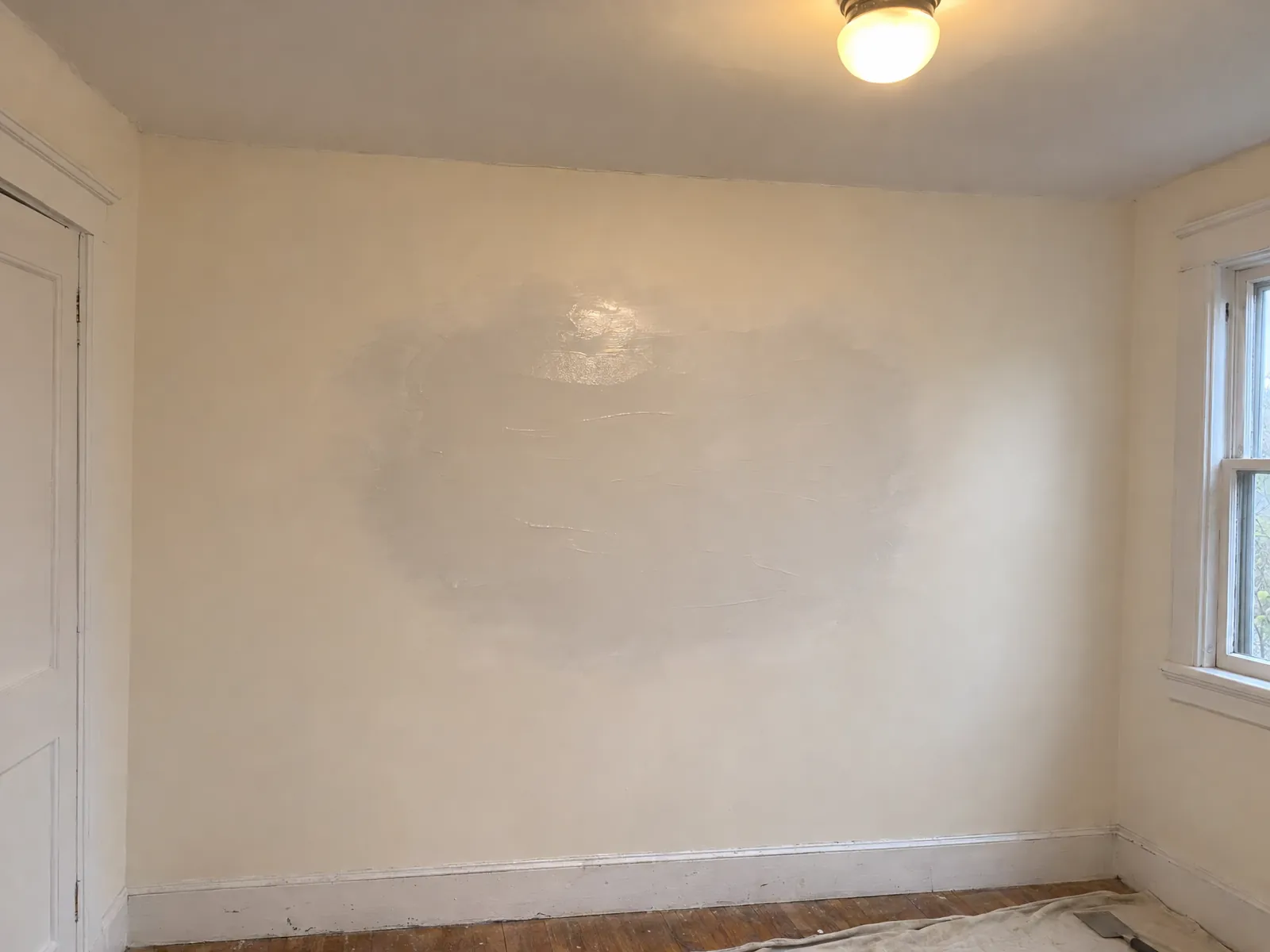
Cracked plaster, split ceilings, water stains and holes, repaired and textured to match so the patch disappears under paint.
A local plaster and drywall pro returns the call, hears the details and books a visit to price it.
Call 7 days, 7am–9pm
01 Valley weather and old walls
Connecticut seasons are hard on plaster.
Winters here are cold, and the heat runs for months. Wood framing and lath dry out and shrink, and hairline cracks open at corners and over doors.
Summers are humid. The same wood takes on moisture and swells. Cracks that opened in February can close up in July, then return.
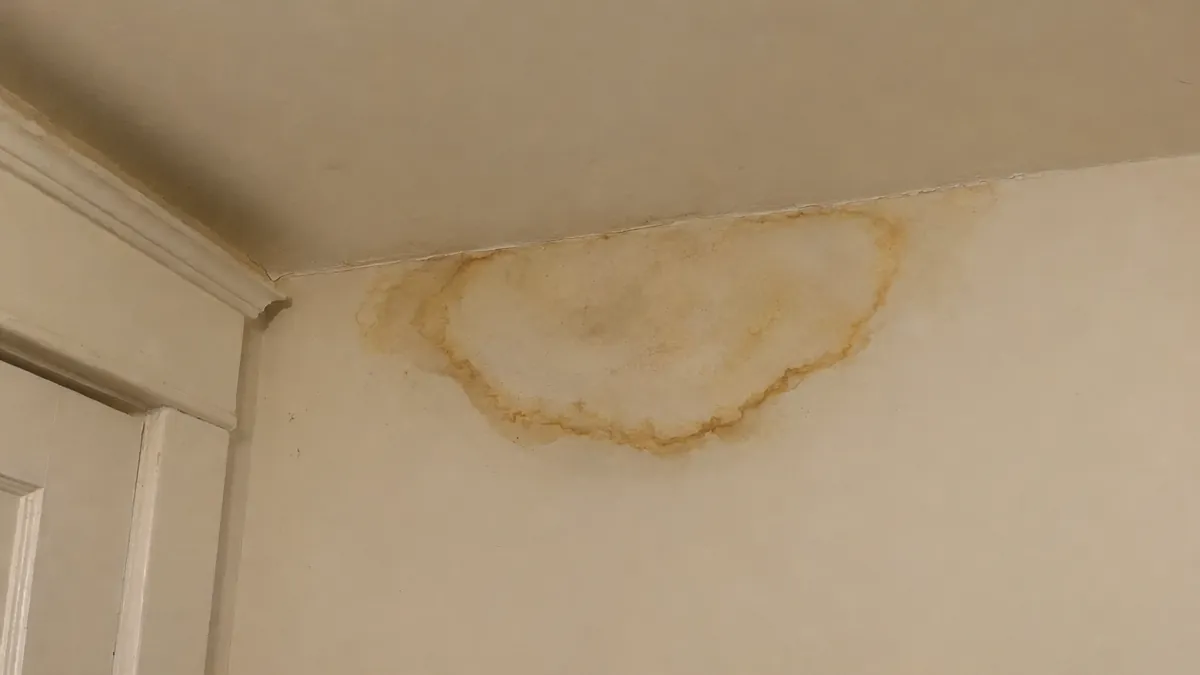
Nor'easters bring heavy snow. Ice builds at the eaves, water backs up under shingles, and a ring shows up overhead in an upstairs room a few days later.
Now and then the remains of a tropical storm push rain sideways into walls. The stain usually appears under a window.
None of this is unusual for a house in the Naugatuck Valley. It just helps to know what you are looking at.
02 Five kinds of wall work
Five lines. One is probably yours.
Most calls fit one of these. If yours doesn't, describe it anyway.
- Plaster wall repairCracks, loose patches and bulges in old lath walls, reattached and skimmed flat.
- Ceiling crack repairLong cracks, sagging spots and split seams overhead, secured and finished smooth.
- Rental unit wall patchingThe list a unit collects between tenants: anchors, dents, door-handle holes and scuffed corners.
- Water-damaged drywallStains, soft spots and bubbled paint after a leak, cut out where needed and rebuilt.
- Drywall hole patchingFrom screw holes to a fist-sized break, closed, backed and finished flush.
Not sure which applies? Check your problem against our guide, or see all repairs on one page.
03 Notes to make before calling
Five minutes now saves a trip later.
- Photograph it twice. Wide, so the room shows. Close, with something for scale.
- Measure roughly. Length of a crack, width of a hole, size of a stain.
- Shut off the water if a leak is still active, and turn off power to any fixture near a wet ceiling.
- Note the surface. Plaster sounds solid and feels cold. Board sounds hollow between studs.
- Note the finish. Smooth, sprayed, swirled, popcorn. A close photo shows it best.
What moves the price
We don't post prices, because walls differ too much. The main drivers are size, height, how loose the plaster is, texture, and how many separate spots go on one visit.
The quote comes from a local pro who has seen the wall, before anything starts.
04 Water on the wall or ceiling
Order matters here.
Stop the water. Fix the roof, pipe or fixture first. A patch over an active leak fails.
Let it dry. Open the room up, run a fan or dehumidifier. Don't paint yet.
Check the moisture. Board can look dry and still read wet inside.
Decide what stays. Firm areas get sealed and painted. Soft or sagging ones are cut out and replaced.
The leak repair page goes into each step.
05 Overhead trouble
Ceilings show every flaw.
Stains need the leak fixed and a stain-blocking primer. Plain paint lets them bleed back.
Sags mean plaster has let go of the lath, or board has gotten wet. Stay out from under a wet one.
Cracks at the wall line that come and go with the seasons are framing movement. In newer houses with roof trusses, this is often called truss uplift.
Popcorn texture can be patched to blend. Older popcorn may contain asbestos, so have a sample checked first.
Seam lines on drywall ceilings mean the tape has loosened. It gets cut out and redone.
More on this under ceiling crack repair.
06 Plaster, board and the finish on top
Know your wall before you patch it.
Plaster on wood lath is what most older Ansonia houses started with. It is hard, a little uneven, and about an inch thick.
Gypsum board came later: sheets screwed to studs, seams taped. Many plaster houses have some board now too, where rooms were redone.
Compound fills and finishes both. Setting-type powder hardens by chemistry and suits deep fills in plaster. Premixed is easier to sand for final coats.
Texture is the last step. Smooth is most common on walls. Orange peel, knockdown and popcorn show up on ceilings. A good patch copies the texture before primer goes on.
07 After the electrician or plumber
Other trades open walls. Someone has to close them.
New wiring, a moved outlet, a pipe repair, a vent run, a TV cable. Each leaves a square hole or a slot.
The fix is simple. Square up the opening, add backing, fit a piece of board, tape, finish, prime.
Book the patch after the other trade is fully done and inspected, if an inspection is needed. Closing up a wall and reopening it costs twice.
In plaster walls, the new piece is shimmed out until it is level with the old surface, which is thicker than board.
08 Ansonia and nearby towns
Both banks of the Naugatuck, and next door.
Ansonia is a compact city with the river running through the middle. Downtown sits on the east bank, with Hilltop and Derby Hill on that side and West Ansonia and Silver Hill across the water.
We also arrange repairs in Derby and Seymour, which share borders with Ansonia, and in Woodbridge, past Hilltop to the east. Shelton, Beacon Falls, Oxford and Naugatuck are on the list too.
Where we work, town by town, with a note on each.
09 Getting ready to sell or hand back keys
What a buyer or inspector notices.
Walk the house the way a stranger would. Patched-over anchors, a dented hall corner, a crack over the front door. Those are what show in listing photos.
Fix what catches light. Leave what is behind furniture that stays.
For a move-out, a landlord's checklist usually cares about holes and gouges, not tiny nail holes. Ask what is expected before paying for everything.
Schedule wall repair a few days before the painter. Patches need to dry and be primed, or they show through.
For a rental turnover, see patching between tenants.
10 The wall, in a few lines
Call 7 days, 7am–9pm
A snapshot of the damage by text works too.
How a job goes: a phone call or the request form starts it. A local pro phones back, hears what happened, and visits. You get a quote first. If you say yes, the repair is done, sanded, primed and left clean for paint.
Next, a local pro phones to hear about the damage and arrange a visit to price it.